Quality control.
Built around
your hardware.
From incoming materials to the final carton, clear requirements connect the fit, movement and finish of your furniture hardware.
Explore the inspection processCertifications & standards
Confidence starts
with the evidence.
Certifications and standards should be relevant to the actual product, facility and destination market. Start with the documents your project needs.
Certifications & standards
Certificate documents will be added here once available.
The right standard, for the right application.
Identify the standard and edition, product model, mounting conditions and acceptance criteria before testing. EN / DIN, ANSI, JIS or ISO references are reviewed against the project—not applied to every product by default.
Management-system certificates and product test reports have different scopes. Any market-specific declaration must match the supplied product and supporting documents.
Four stages.
One agreed quality brief.
A control-plan framework from receipt to dispatch. Agree checkpoints, sample sizes, defect classifications and release criteria for your order before production.
Start with the material, not just the finished part.
Identify the incoming material and agree the checks that matter to the selected hardware.
- Material reference, grade and supplier documents
- Thickness, dimensions and visible surface condition
- Hardness or composition testing where specified
- Record to agree
- Material identification, supplier lot and receiving inspection record.
- Release checkpoint
- Confirm conformity to the agreed material specification before use.
Keep the drawing close to the production process.
Set first-piece and in-process checkpoints around forming, riveting, assembly and finishing, as applicable.
- First-piece dimensions and mounting-hole positions
- Forming, rivet condition and assembly clearances
- Movement, finish and checks after a process change
- Record to agree
- Drawing revision, production lot and checkpoint results.
- Release checkpoint
- Review deviations before the affected parts move to the next operation.
Review the hardware as a complete assembly.
Compare the finished configuration with the agreed drawing, sample and functional requirements before packing.
- Dimensions, fit and supplied accessories
- Travel, closing or support function for the model
- Finish appearance and specified performance tests
- Record to agree
- Product reference, sample identification and inspection results.
- Release checkpoint
- Assess results against the agreed acceptance criteria; separate non-conforming items.
Check that the shipment matches the order.
Agree the final sampling and document review before dispatch, including any independent inspection.
- Model, quantity, batch reference and carton markings
- Protective packaging and packing-list alignment
- Inspection records and agreed shipment documents
- Record to agree
- Shipment reference, sampled quantities and release decision.
- Release checkpoint
- Resolve outstanding findings and confirm the release requirements before dispatch.
Different hardware.
Purposeful checks.
Select the product family to see what belongs in its inspection brief. Test results are meaningful only with the model, installation and conditions recorded.
Drawer slides
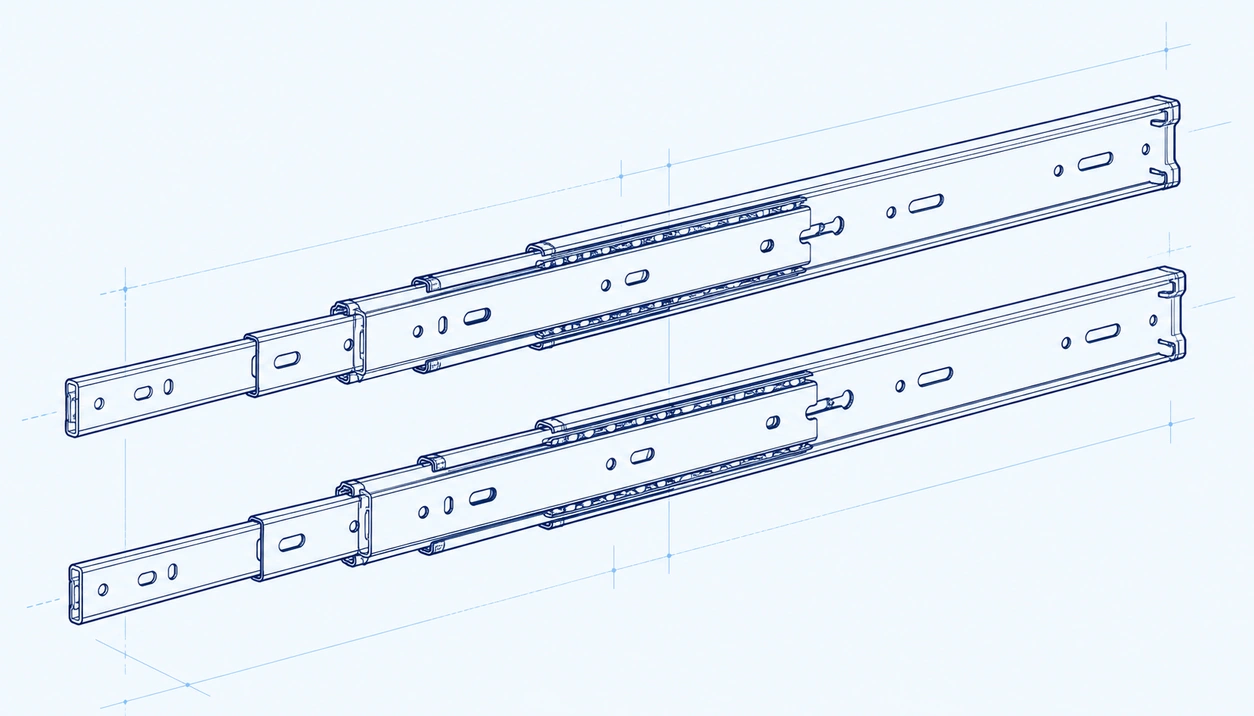
Fit, travel and repeatable movement.
- Dimensions & assembly
- Check rail profile, mounting positions, length and side clearance against the drawing.
- Operation & durability
- Agree the load, extension, travel and cycle conditions. Review roller or ball-bearing movement, release and closing action for the selected model.
EN 15338Extension elements and their componentsReference to discuss, not a certification claim.
Shelf brackets
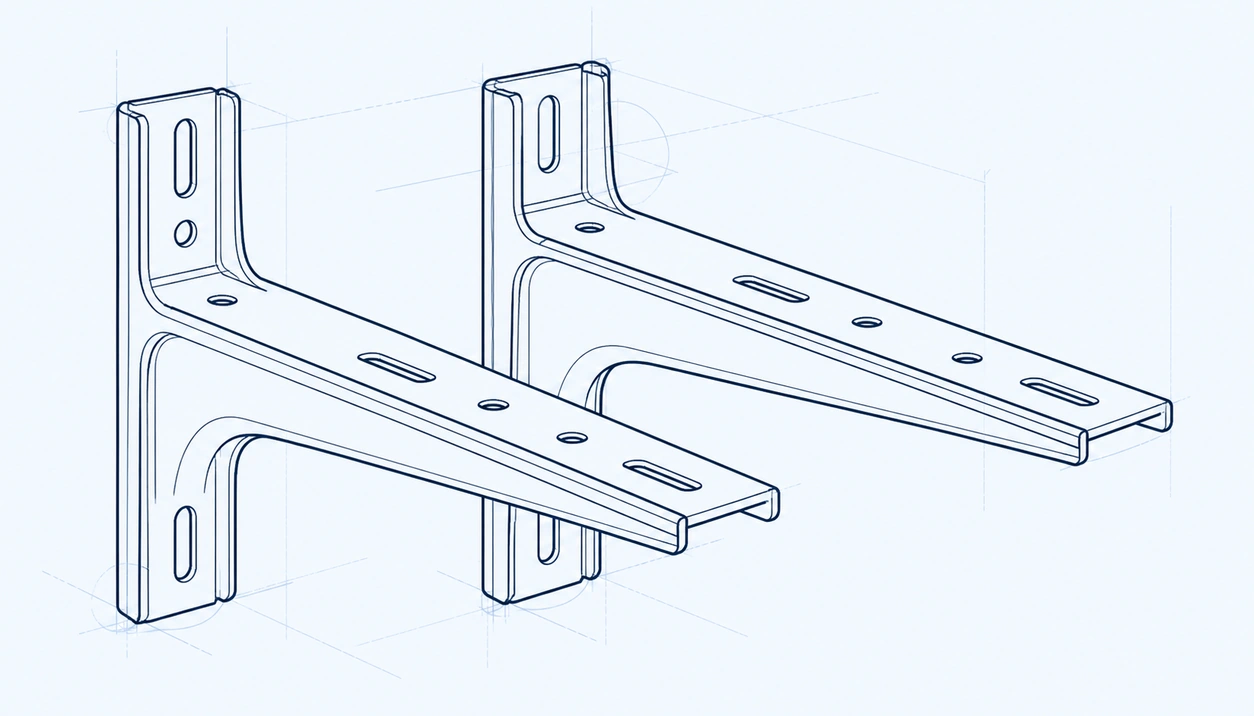
Support starts with the installation.
- Geometry & connection
- Review angle, hole positions, section dimensions and weld or joint condition where applicable.
- Load & stability
- Define the shelf, fixing method, substrate and bracket spacing before agreeing a load test. Ratings depend on the complete installation.
EN 16337Shelf supports, within the applicable mounting scopeReference to discuss, not a certification claim.
Soft-close hinges
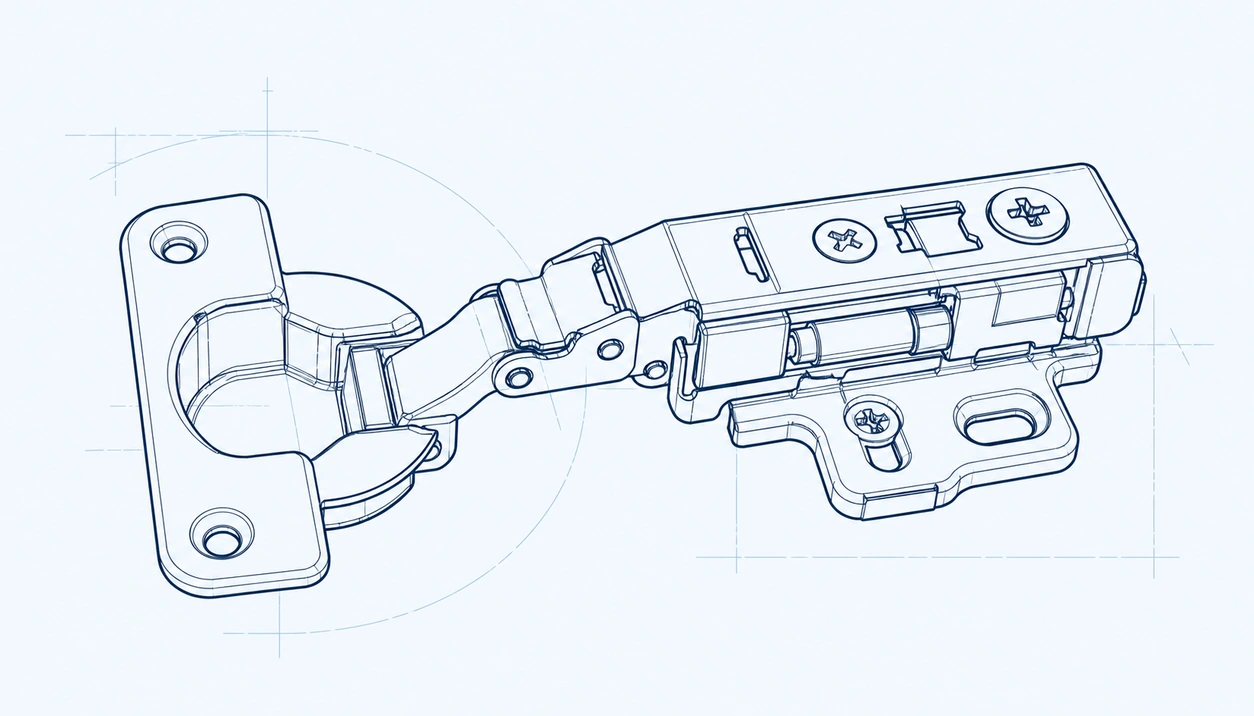
Controlled closing. Confirmed fit.
- Mounting & adjustment
- Confirm cup and fixing geometry, overlay, door thickness and adjustment for the selected configuration.
- Closing & endurance
- Agree the door setup, opening conditions and cycle requirement. Review closing behaviour and the stability of the assembled hinge.
EN 15570Furniture hinges pivoting on a vertical axisReference to discuss, not a certification claim.
A batch reference.
A clearer path to resolution.
Define the record links your project requires, from incoming material and production checks to the shipment reference. Confirm the traceability scope before ordering.
- Material lotSupplier & receiving reference
- Production batchProcess & drawing revision
- Inspection recordSamples, checks & disposition
- Shipment referenceOrder, carton & packing list
When something needs attention.
A useful claim starts with the order, model and batch reference, affected quantity, installation conditions, and clear photos or video.
Discuss a quality concernNon-conformities & corrective action
- Contain & identifyIdentify affected goods and agree containment before further use or dispatch.
- Investigate & correctReview the evidence, verify the cause and agree a corrective action and product disposition.
- Verify & prevent recurrenceCheck effectiveness and update the relevant requirements. An 8D report can be included in the agreed response plan.
Open to
independent inspection.
Independent pre-shipment inspection is welcome. Nominate your inspection provider and agree the scope, sampling plan, acceptance criteria and reporting requirements in advance.
What the inspection record should contain
A reporting checklist—not a completed inspection report.
- Identification
- Order, model, drawing revision and batch
- Sampling
- Lot quantity, sample size and selection basis
- Evaluation
- Requirements, method, conditions and recorded results
- Conclusion
- Findings, disposition, date and responsible reviewer
Align the inspection before shipment.
Share your inspection brief, required test methods and reporting format. Timing, access and any laboratory work are coordinated for the specific order.
Discuss an inspection briefA redacted report sample will be added when available.
Manufacturing scale.
Attention to detail.
GLIDIVO manufactures drawer slides, shelf brackets and soft-close hinges for international furniture projects.
Our focus is on the details that matter: dimensional fit, smooth movement, surface finish and protective packaging. Agreed drawings, sample references and inspection requirements give each project a clear basis for review.
Scroll sideways to view all figures.
Make your standard the starting point.
Bring your drawing, sample reference or inspection brief. Let’s define the details for your project.